


Kỳ thi IELTS Speaking Quý 2 và Quý 3 năm 2026 đang chứng kiến sự xuất hiện của các chủ đề trừu tượng, đòi hỏi tư duy phản biện cao như: “Công nghệ AI trong giáo dục”, “Tác động của đô thị hóa đến lối sống”, hay “Giá trị của các di sản văn hóa phi vật thể”.
Nếu bạn đang lo lắng về việc bí ý tưởng, thiếu từ vựng chuyên sâu hoặc sợ câu trả lời nghe như “học vẹt”, bài viết này chính là lời giải. The Real IELTS đã tổng hợp bộ 15 topic IELTS Speaking khó nhất được dự đoán có tần suất xuất hiện cao nhất, kèm theo bài mẫu chi tiết, phân tích collocations giúp bạn nâng band nhanh chóng và vượt qua nỗi sợ mất bình tĩnh trong phòng thi.
Tổng quan về xu hướng đề thi IELTS Speaking Q2/Q3 2026
Đề thi năm 2026 không còn chỉ xoay quanh các chủ đề quen thuộc như “Hobbies” hay “Hometown”. Giám khảo hiện nay ưu tiên các câu hỏi đòi hỏi khả năng lập luận sắc bén hơn.
Tại The Real IELTS, đội ngũ chuyên môn của chúng tôi trực tiếp đăng ký tham gia kỳ thi chính thức theo chu kỳ hàng quý. Việc này giúp chúng tôi nắm bắt chuẩn xác xu hướng thay đổi trong examiner assessment criteria.
Chúng tôi nhận thấy sự chuyển dịch rõ rệt sang các nhóm chủ đề: Công nghệ AI, Đô thị hóa bền vững, và Giá trị văn hóa phi vật thể. Để đạt IELTS Speaking Band 7.5+, thí sinh không thể chỉ học vẹt. Bạn cần khả năng diễn đạt tư duy mạch lạc và sự đa dạng trong từ vựng (lexical variety).

Để đạt được mục tiêu Band 7.5+ một cách bền vững, việc tự học cần đi đôi với sự hướng dẫn bài bản. Bạn có thể khám phá thêm các lộ trình học tập được tối ưu hóa theo năng lực cá nhân tại The Real IELTS
, nơi các phương pháp đào tạo đã được kiểm chứng qua hàng ngàn học viên thực tế. Ngoài ra, việc cập nhật liên tục các thay đổi về tiêu chí chấm điểm từ các tổ chức khảo thí chính thức luôn là ưu tiên hàng đầu tại The Real IELTS để đảm bảo thí sinh không bị bỡ ngỡ trước những cấu trúc đề thi mới nhất.
“Báo cáo hiệu suất từ Cambridge English nhấn mạnh rằng việc sử dụng từ vựng đa dạng là yếu tố tiên quyết để đạt band điểm cao trong tiêu chí Lexical Resource.”
Nguồn: Cambridge English IELTS test statistics 2026
15 Topic IELTS Speaking khó nhất và cách xử lý
Dưới đây là các chủ đề “gây khó dễ” nhất cho thí sinh trong giai đoạn này. Mọi bài mẫu đều được kiểm duyệt bởi Thầy Dương Nguyễn Anh để đảm bảo tính chuẩn xác.
Nhóm chủ đề Công nghệ & AI
- AI in Education: Ảnh hưởng của AI đến cách học sinh tư duy.
- Digital Privacy: Bạn có lo lắng về quyền riêng tư trên internet?
- Remote work vs. Office work: Tương lai của môi trường làm việc.
Mẹo xử lý: Đừng chỉ nói “tôi thích” hay “tôi ghét”. Hãy áp dụng mô hình PPF (Past – Present – Future). Ví dụ, với chủ đề AI, hãy nói về cách AI đã thay đổi việc tự học (Past), cách nó đang hỗ trợ bạn hiện nay (Present), và tầm nhìn của bạn về tương lai (Future). Việc này giúp tăng điểm fluency and coherence đáng kể.
SAMPLE SPEAKING PART 1 – ROAD TO BAND 7.5+
1. Are you good at memorizing phone numbers?
I would say I’m fairly average when it comes to memorizing phone numbers. I find that I can remember a few important numbers, such as my own, close family members’, and some key contacts. However, I tend to rely on my phone’s address book for less frequently used numbers. The repetition of dialing or storing them in my phone helps with memorization, but I don’t have a particularly strong knack for remembering phone numbers without this aid.
2. Are people good at math better at memorizing phone numbers?
There is some evidence to suggest that people who are good at math may have better memory skills, including the ability to remember numbers. This could be because they frequently engage in activities that involve working with numbers and patterns, which can enhance their numerical memory. However, memorization abilities can vary widely from person to person and are influenced by various factors, such as practice and the techniques used rather than just inherent aptitude.
3. What kinds of numbers do you have to remember in your daily life?
In my daily life, I have to remember several types of numbers. These include my phone number, various passwords and PINs for online accounts, important dates like anniversaries and appointments, and occasionally numerical codes for work-related tasks. I also need to remember numbers related to financial transactions, such as bank account details and credit card numbers. To manage all these, I use a combination of memorization techniques and secure digital storage solutions.
4. Is it difficult for you to memorize math formulas?
Yes, I find memorizing math formulas somewhat challenging. While I understand the concepts behind the formulas, remembering them verbatim requires consistent practice and review. I often use mnemonic devices and practice problems to reinforce my memory. Additionally, applying the formulas in different contexts helps solidify my understanding and recall. Despite these efforts, I still find that revisiting the formulas regularly is necessary to keep them fresh in my mind.
SAMPLE SPEAKING PART 1 – ROAD TO BAND 7.5+
1. Do you like perfume?
Yes, I really enjoy perfume as it adds a layer of sophistication and freshness to my daily routine. A good fragrance can make me feel more confident and uplift my mood. I particularly like subtle, floral scents or those with a hint of citrus, as they feel both refreshing and elegant.
2. Do you use perfume?
Yes, I do use perfume regularly. I wear it every day, especially when I’m going out or attending an important event. I find that wearing a fragrance not only enhances my personal style but also gives me a sense of completeness and self-assurance. I always choose perfumes that match my personality and the occasion.
3. Have you ever sent perfume to others as a gift?
Yes, I have given perfume as a gift on a few occasions. I think it’s a thoughtful and personal gift that can show how well you know someone’s preferences. It also feels like a luxury gift, and I’ve noticed that people really appreciate the gesture, especially when the scent is carefully chosen to match their taste.
4. How popular is perfume in your country?
Perfume is quite popular in my country, particularly among people who value personal grooming and luxury items. Many people use it daily, especially in urban areas where there’s a strong culture of fashion and appearance. Perfume is also a common gift during special occasions, such as birthdays and holidays, reflecting its status as both a practical and luxurious product.
5. What kind of perfume do you usually prefer?
I usually prefer light and fresh fragrances, especially floral or citrus scents, because they are pleasant without being too overpowering. I also like perfumes with woody or musky notes for evenings or special occasions, as they feel more elegant and long-lasting. The scent I choose often depends on the season, my outfit, and the mood I want to create.
SAMPLE SPEAKING PART 1 – ROAD TO BAND 7.5+
1. Do you enjoy learning about history?
Yes, I find history fascinating, as it offers insights into the past and helps me understand the present. Learning about history allows me to explore how societies have evolved over time and the significant events that shaped our world. It also gives me the chance to reflect on past mistakes, achievements, and cultural developments. While it can be challenging to remember all the details, I enjoy connecting historical events to current global issues.
2. What historical event interests you the most?
One of the historical events that interests me the most is World War II. The global scale of the conflict and its impact on many aspects of life, including politics, economy, and culture, makes it a crucial period in history. I am particularly drawn to the stories of resilience and survival during such a turbulent time. The way it reshaped international relations and led to the formation of organizations like the United Nations is a topic that intrigues me greatly.
3. Do you prefer learning history from books or videos?
I prefer learning history from a combination of both books and videos, as each medium offers distinct advantages. Books provide in-depth analysis and allow me to dive deep into details, whereas videos, especially documentaries, offer visual representation and bring historical events to life in a way that is often more engaging. Videos can also make complex events easier to understand, and they allow me to see historical locations, which enriches the learning experience.
4. Have you ever visited a historical site?
Yes, I have visited several historical sites, and each experience has been memorable. One that stands out is my visit to the ancient city of Hoi An in Vietnam. The historical architecture, combined with the rich cultural heritage, gave me a deeper understanding of the country’s history. It was fascinating to walk through such a well-preserved historical site and see how past civilizations lived. Visiting these sites not only enhances my learning but also connects me emotionally to history.
SAMPLE SPEAKING PART 1 – ROAD TO BAND 7.5+
SAMPLE SPEAKING PART 1 – ROAD TO BAND 7.5+
1. Is your voice different from when you were young?
Yes, definitely. My voice has become deeper and more stable compared to when I was a child. Back then, I used to speak much faster and my voice sounded quite high-pitched. As I’ve grown older, I’ve become more confident in expressing myself, so I tend to speak more clearly and at a more natural pace. I think my voice now reflects my personality much better than it did in the past.
2. Is your voice similar to that of a family member?
Yes, many people say my voice is quite similar to my father’s. We both have relatively deep voices and a calm way of speaking. Even over the phone, some relatives have mistaken me for him, which I find quite amusing. I suppose genetics play a big role in shaping our voices, although our speaking styles are still a little different.
3. Do you enjoy recording your voice and listening to it?
Not really. Like many people, I find it a bit strange hearing my own recorded voice because it sounds different from what I hear when I speak. However, I do record myself occasionally, especially when I’m practicing presentations or improving my English pronunciation. Listening to those recordings helps me notice areas where I can speak more fluently and confidently.
4. Does everyone have the same voice?
No, I don’t think so. Every person’s voice is unique, just like a fingerprint. Factors such as age, gender, accent, vocal cords, and even personality can influence the way someone sounds. On top of that, people’s tone and speaking style often reflect their emotions and cultural background making every voice distinctive in its own way.
5. Do you think a person’s voice is important?
Yes, absolutely. I think a person’s voice plays an important role in communication because it can influence the way others perceive them. A clear, pleasant voice can make someone sound more confident, trustworthy, and engaging. While appearance may create a first impression, I believe a person’s voice often leaves a lasting one, especially in professional or social situations.
SAMPLE SPEAKING PART 1 – ROAD TO BAND 7.5+
1. Do you often use dictionaries?
Yes, I do, although not as often as I used to. Nowadays, I mostly rely on digital dictionaries because they’re fast, convenient, and accessible on my phone. Whenever I come across an unfamiliar word, I can look it up within seconds. It’s become an essential tool for both my studies and everyday communication.
2. What do you use dictionaries for?
I mainly use dictionaries to check the meanings of new words, their pronunciation, and how they’re used in context. I also look up collocations, synonyms, and example sentences, especially when I’m writing essays or preparing for English exams. This helps me use vocabulary more naturally and accurately rather than simply memorizing definitions.
3. What kinds of dictionaries do you think are most useful?
I think learner’s dictionaries are the most useful, particularly for people studying English as a second language. They provide simple definitions, clear example sentences, and useful information about grammar and word usage. Online dictionaries are even more helpful because they often include audio pronunciations, word frequency, and related expressions, making learning much more efficient.
4. Do you think using dictionaries is useful for learning a language?
Absolutely. Dictionaries do much more than explain the meaning of words. They help learners improve their vocabulary, pronunciation, spelling, and even grammar. More importantly, they teach you how words are actually used in real-life situations, which makes it easier to communicate naturally and avoid common mistakes.
5. What kind of information do you find in a dictionary?
A dictionary usually provides a wide range of information, including a word’s definition, pronunciation, part of speech, spelling, and example sentences. Many dictionaries also include synonyms, antonyms, collocations, idioms, and common phrases. Some advanced dictionaries even explain the origin of a word and indicate whether it’s formal, informal, or commonly used in spoken or written English.
SAMPLE SPEAKING PART 1 – ROAD TO BAND 7.5+
1. Did you have a bike when you were young?
Yes, I did. I got my first bicycle when I was around seven years old, and I was absolutely thrilled. It wasn’t anything fancy, but it gave me a sense of freedom and independence. I used to ride it around my neighborhood almost every afternoon with my friends.
2. Did you ride a bike to school?
Yes, I did when I was in primary and secondary school. Since my school was only a few kilometers from home, cycling was the most convenient way to get there. It helped me become more independent and gave me some daily exercise before and after classes.
3. Do you ride a bike when you go out now?
Not very often. These days, I usually travel by motorbike or public transportation because they’re faster and more practical, especially when I have a busy schedule. However, I still enjoy cycling occasionally for leisure or exercise, particularly on weekends when the weather is pleasant.
4. Are there many young people riding bicycles in Vietnam?
Not as many as before. Nowadays, most young people prefer motorbikes because they’re much faster and more convenient for longer distances. However, bicycles are still popular among students and people who cycle for fitness or environmental reasons, especially in larger cities where cycling clubs are becoming more common.
5. Do you think bicycles would do well in your city?
Yes, I think they have great potential, but some improvements are needed first. The heavy traffic and limited cycling lanes make riding a bike less safe and less attractive. If the local government invested in better cycling infrastructure and promoted eco-friendly transportation, I believe more people would choose bicycles over motorbikes for short trips.
SAMPLE SPEAKING PART 1 – ROAD TO BAND 7.5+
1. Do you always bring a lot of keys with you?
Not really. I usually carry just a few essential keys, such as my house key, my motorbike key, and sometimes my office key. I prefer to keep my keychain light because it’s more convenient and easier to organize. Nowadays, many places use electronic access systems, so I don’t need to carry as many physical keys as before.
2. Have you ever lost your keys?
Yes, I have, and it was quite a stressful experience. A few years ago, I accidentally left my keys at a café and didn’t realize it until I got home. Fortunately, the staff had kept them safe, so I was able to retrieve them later that day. Since then, I’ve become much more careful about checking my belongings before leaving anywhere.
3. Do you often forget the keys and lock yourself out?
Fortunately, no. I’m usually quite careful about making sure I have my keys before I leave the house. I have a habit of checking my pockets or bag before closing the door, so it rarely happens. I also keep a spare key in a safe place just in case of emergencies.
4. Do you think it’s a good idea to leave your keys with a neighbor?
Yes, but only if you completely trust your neighbor. Leaving a spare key with someone reliable can be very helpful in emergencies, especially if you accidentally lock yourself out. However, I think it’s important to choose someone responsible because it also involves privacy and home security.
5. Have you ever locked yourself out?
Yes, I have, although it has only happened once. I was in a hurry and left the house without checking whether I had my keys. It was quite inconvenient because I had to wait for a family member to come home and unlock the door. That experience taught me to double-check my keys before leaving the house.
SAMPLE SPEAKING PART 1 – ROAD TO BAND 7.5+
1. Are you good at memorizing things?
I’d say I’m fairly good at memorizing things, especially when I understand the information rather than simply trying to memorize it by heart. I tend to remember ideas and concepts more easily than isolated facts. However, I sometimes forget small details if I’m too busy or distracted.
2. Have you ever forgotten something important?
Yes, unfortunately I have. Once, I completely forgot about an important meeting because I didn’t check my calendar that morning. It was quite embarrassing, and I had to apologize afterward. Since then, I’ve made it a habit to set reminders on my phone to avoid making the same mistake again.
3. Why do some people have good memories while others just don’t?
I think several factors contribute to memory, including genetics, lifestyle, and daily habits. People who get enough sleep, exercise regularly, and keep their minds active often have better memories. In contrast, stress, lack of sleep, and information overload can make it much harder to remember things.
4. Why do more people rely on cell phones to memorize things?
Because smartphones are incredibly convenient. Instead of trying to remember everything themselves, people can simply store information in notes, calendars, or reminder apps. This saves mental effort and reduces the risk of forgetting important events. As a result, many people have become increasingly dependent on their phones for everyday memory tasks.
5. Do you think it is easy to remember people’s names?
Not always. I think remembering names can be difficult, especially when meeting many people in a short period of time. I usually remember someone’s face much more easily than their name. To improve, I try to repeat the person’s name during the conversation, which helps reinforce it in my memory.
⚡ Quick Quiz: Đoán từ vựng
Instead of saying “I am very busy”, you can say: “I am ________ with work.”
“Khảo sát từ cộng đồng IELTS ghi nhận xu hướng đề thi Quý 2/2026 đang dịch chuyển mạnh mẽ sang các chủ đề trừu tượng và vấn đề xã hội đương đại.”
Nguồn: IELTS speaking trend Q2 2026 Reddit
Lộ trình ôn luyện 15 Topic
Câu hỏi thường gặp về IELTS Speaking 2026
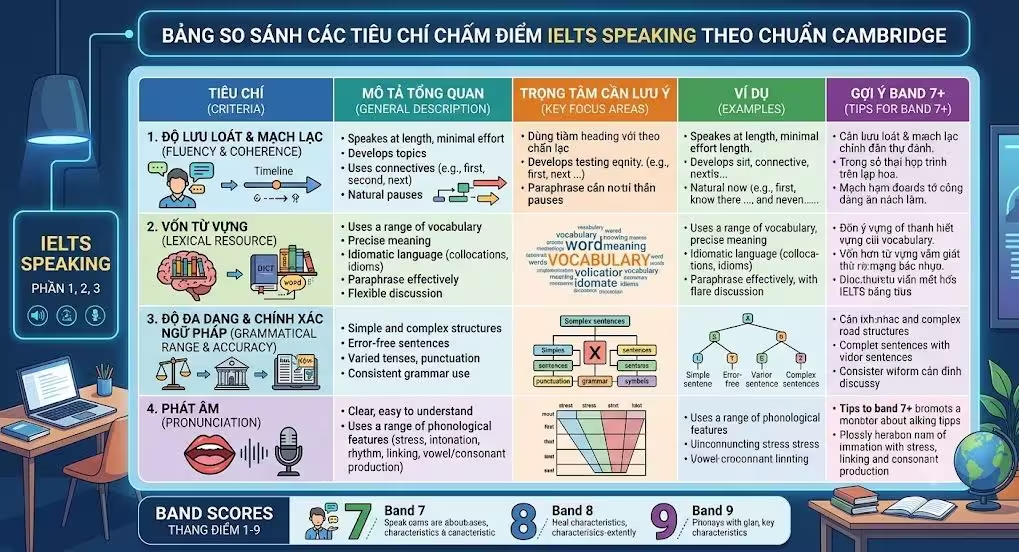
BẢNG TIÊU CHÍ CHẤM ĐIỂM IELTS SPEAKING (CAMBRIDGE)
| Tiêu chí | Mô tả chi tiết |
|---|---|
| Fluency & Coherence | Độ trôi chảy, tốc độ nói, sự kết nối logic giữa các ý và cách sử dụng từ nối. |
| Lexical Resource | Vốn từ vựng, khả năng dùng từ chính xác, linh hoạt và các cụm từ (collocations). |
| Grammatical Range & Accuracy | Sự đa dạng của cấu trúc câu (đơn, ghép, phức) và độ chính xác của ngữ pháp. |
| Pronunciation | Cách phát âm, ngữ điệu (intonation), nhấn âm (word stress) và sự rõ ràng khi nói. |
Tại sao bạn nên tin tưởng vào The Real IELTS?
The Real IELTS không chỉ là một trung tâm đào tạo, chúng tôi là đơn vị tham chiếu uy tín.
- Trải nghiệm thực tế: Dữ liệu thực nghiệm từ hàng ngàn học viên giúp chúng tôi sửa lỗi L1 interference (tư duy dịch Word-by-Word) hiệu quả.
- Chuyên môn cao: Giảng viên tại trung tâm sở hữu chứng chỉ IELTS 8.5-9.0 và bằng cấp TESOL/CELTA quốc tế.
- Sự minh bạch: Chúng tôi công khai bảng điểm và mã TRF thực tế. Mỗi nội dung trên website đều qua quy trình Double-review nghiêm ngặt.
Bạn có thể tìm hiểu thêm về uy tín của chúng tôi qua các cộng đồng lớn như The Forum IELTS hoặc xem các chia sẻ thực tế trên TikTok.
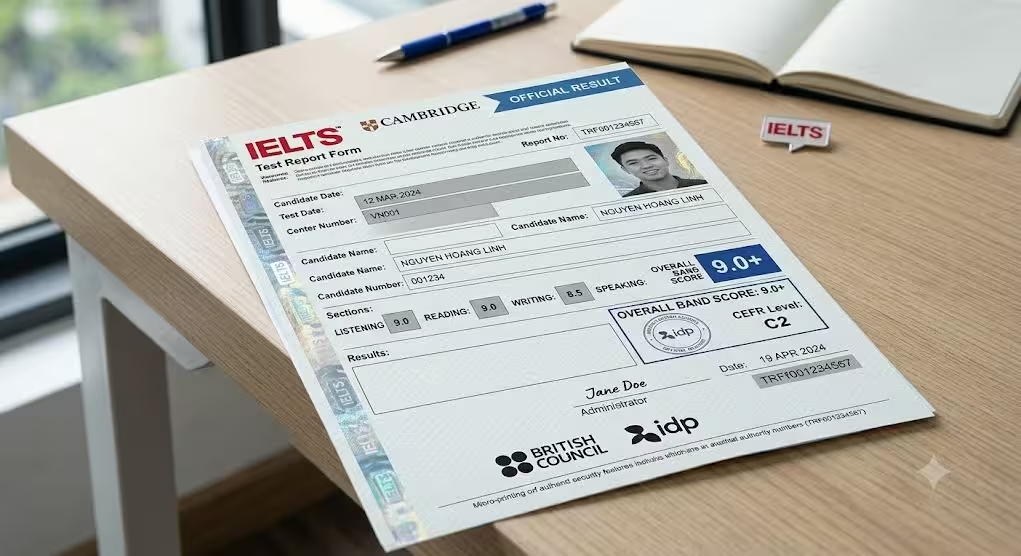
“Dữ liệu thực nghiệm về tỷ lệ đạt band 7.5+ tại Việt Nam phản ánh sự cần thiết của lộ trình ôn luyện chuyên sâu và cập nhật chiến thuật thi cử bám sát thực tế.”
Nguồn: IELTS band score statistics Vietnam 2025 2026
Lộ trình bứt phá Band điểm cho Q2/Q3 2026
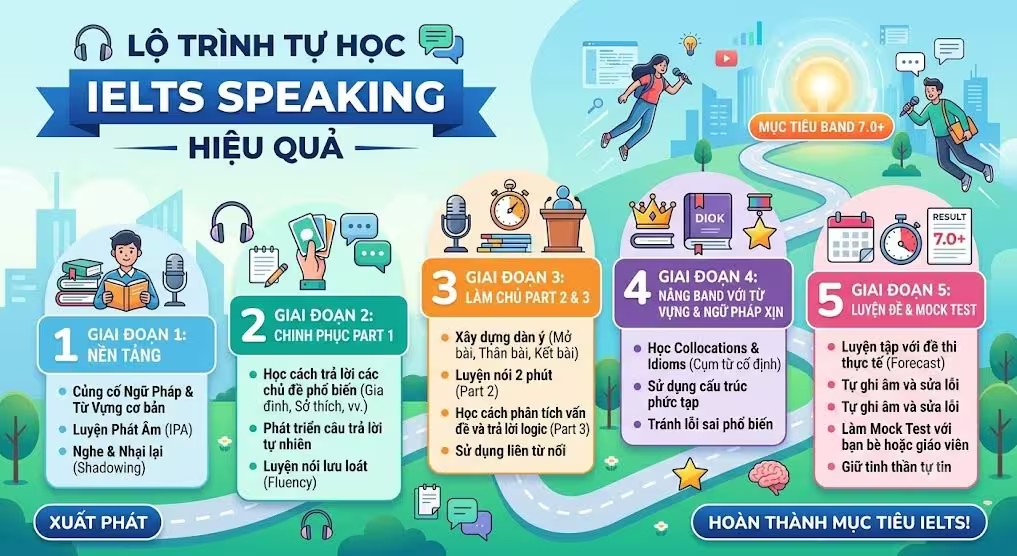
Để chinh phục IELTS preparation strategy trong thời gian tới, bạn cần:
- Cập nhật đề thi: Bám sát các bộ đề dự đoán mới nhất của chúng tôi trên YouTube The Real IELTS.
- Tập trung vào Coherence: Sử dụng các từ nối linh hoạt thay vì lạm dụng từ vựng khó.
- Tư duy phản biện: Tập phản biện lại các ý kiến thông thường để tạo sự độc đáo.
Đừng để nỗi sợ thất bại cản bước bạn. Với lộ trình bài bản và tài liệu chất lượng từ The Real IELTS, mục tiêu 7.5+ nằm trong tầm tay. Tham khảo ngay các khóa học chuyên sâu của chúng tôi tại therealielts.vn để được tư vấn lộ trình cá nhân hóa nhất!
- Bẫy “Tự sửa lỗi thái quá”: Việc bạn dừng lại quá nhiều lần để sửa lỗi ngữ pháp nhỏ (ví dụ: chia sai động từ) sẽ khiến giám khảo đánh giá thấp độ trôi chảy (Fluency). Chỉ nên tự sửa lỗi nếu đó là sai sót nghiêm trọng ảnh hưởng đến nghĩa của câu.
- Bẫy “Trả lời quá ngắn”: Đối với các câu hỏi Part 1, nếu bạn chỉ trả lời “Yes/No”, giám khảo sẽ phải hỏi dồn (follow-up). Hãy luôn áp dụng công thức: Câu trả lời trực tiếp + 1 câu giải thích lý do + 1 câu ví dụ hoặc quan điểm mở rộng để chủ động kiểm soát thời gian.
Data Sources / Nguồn tham khảo
Chủ đề liên quan
- Hướng dẫn tự học IELTS Speaking tại nhà từ A-Z
- Phân tích tiêu chí chấm điểm IELTS Speaking chi tiết
- Top 50 collocations “ăn điểm” trong kỳ thi IELTS Speaking
- Cách vượt qua nỗi sợ mất bình tĩnh trong phòng thi IELTS
- Chiến lược phát triển tư duy phản biện cho thí sinh IELTS
- Review lộ trình học IELTS tại The Real IELTS
- Tổng hợp từ vựng IELTS theo chủ đề Công nghệ và Đô thị hóa
- Kỹ thuật sử dụng Idioms trong IELTS Speaking Part 3
- So sánh hình thức thi IELTS trên máy tính và trên giấy
- Cách xử lý khi gặp chủ đề lạ trong phòng thi Speaking
IELTS Speaking Band Calculator
Chọn band điểm cho từng tiêu chí:
Liên hệ ngay: 0922985555 để được tư vấn miễn phí!