


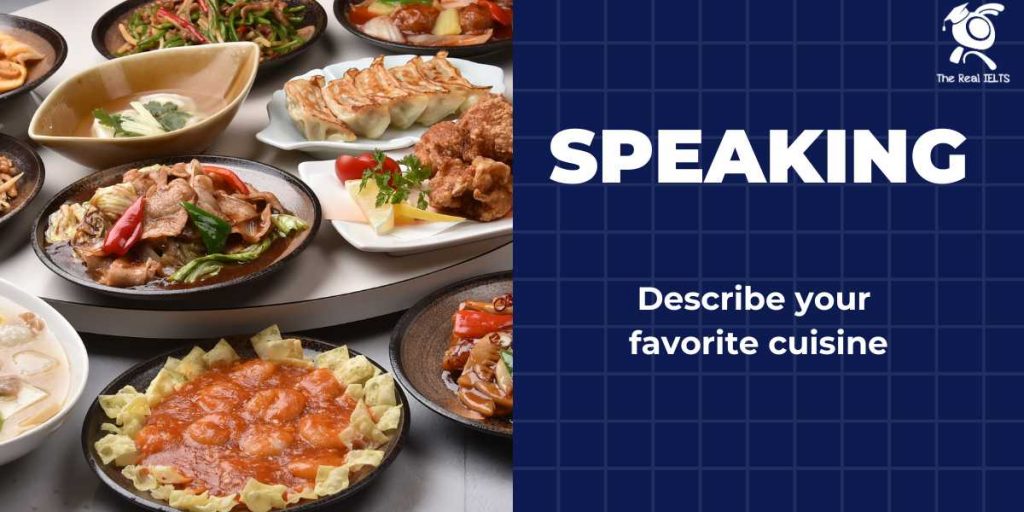
Bài Speaking: Describe your favorite cuisine
Part 1: Warm-up Questions
- Do you enjoy trying new types of food?
- Yes, I really enjoy trying new types of food. It’s exciting to explore different flavors and culinary traditions from around the world. I believe it broadens my palate and enhances my dining experiences.
- How often do you eat out at restaurants?
- I eat out at restaurants about once or twice a week. It’s a nice way to unwind after a busy day and to try dishes that I don’t usually cook at home.
- What is the most unusual food you have tried?
- The most unusual food I have tried is probably sea urchin. It has a unique, briny flavor and a creamy texture. It was an interesting experience, although it’s not something I would eat regularly.
Part 2: Cue Card
Describe your favorite cuisine. You should say:
- What the cuisine is
- My favorite cuisine is Italian cuisine.
- What kind of dishes it includes
- It includes a variety of dishes such as pasta, pizza, risotto, lasagna, and tiramisu. Italian cuisine is known for its use of fresh ingredients like tomatoes, garlic, olive oil, and basil.
- Where you first tried it
- I first tried Italian cuisine when I was on a family vacation in Italy about five years ago. We visited a small, cozy restaurant in Rome where I had my first authentic Italian pizza.
- And explain why it is your favorite
- I love Italian cuisine because of its simplicity and emphasis on fresh, high-quality ingredients. The flavors are always vibrant and satisfying. Additionally, the meals are often shared among friends and family, making dining a more communal and enjoyable experience. Overall, Italian cuisine not only pleases my palate but also brings back fond memories of my travels and time spent with loved ones.
Part 3: Discussion Questions
- How has globalization affected the popularity of different cuisines around the world?
- Globalization has significantly increased the popularity of different cuisines worldwide. It has made it easier for people to access and experience foods from various cultures. International restaurants, food festivals, and cooking shows have introduced diverse culinary traditions to a global audience, making dishes like sushi, tacos, and curry widely available and appreciated.
- Do you think traditional cuisines are being replaced by fast food in your country? Why or why not?
- To some extent, traditional cuisines are being overshadowed by fast food, especially in urban areas where people have busy lifestyles and prefer quick, convenient meals. However, there is also a growing trend of people seeking healthier and more authentic food options, leading to a resurgence in traditional cuisine. Many restaurants and food markets are focusing on promoting and preserving local culinary traditions.
- How important is it for people to maintain their traditional food culture in the modern world?
- Maintaining traditional food culture is very important in the modern world. It helps preserve a community’s heritage and identity, fosters a sense of belonging, and keeps culinary traditions alive for future generations. Additionally, traditional diets often include balanced and nutritious foods, contributing to better health and well-being.
- What role do you think food plays in cultural identity?
- Food plays a crucial role in cultural identity. It reflects a community’s history, geography, and values. Traditional dishes often carry stories and memories passed down through generations. Food also brings people together during celebrations, rituals, and everyday meals, reinforcing cultural bonds and shared heritage.
- How can governments promote healthy eating habits among their citizens?
- Governments can promote healthy eating habits by implementing policies that encourage the consumption of nutritious foods. This can include subsidizing fruits and vegetables, regulating food marketing, especially to children, and providing education on balanced diets through public campaigns. Additionally, governments can support local farmers’ markets and promote school meal programs that offer healthy, balanced meals to students.
Bài Speaking mẫu Describe your favorite cuisine
Đọc lại bài cũ: Speaking Part 17: Talk about a recent news story that caught your attention.


