IELTS: Bước Đệm Để Chinh Phục Các Trường Đại Học Hàng Đầu Thế Giới

Chứng chỉ IELTS (International English Language Testing System) không chỉ là một bài kiểm tra tiếng Anh mà còn là một công cụ quan trọng giúp sinh viên hiện thực hóa ước mơ du học và phát triển sự nghiệp quốc tế.
Tầm Quan Trọng của IELTS Trong Hành Trình Du Học và Phát Triển Nghề Nghiệp Quốc Tế

Chứng chỉ IELTS (International English Language Testing System) đã trở thành một yêu cầu thiết yếu cho những ai có ý định du học hoặc phát triển sự nghiệp tại các quốc gia nói tiếng Anh.
Tớ đã đạt 7.5 IELTS khi chỉ mới học lớp 8 như thế nào?
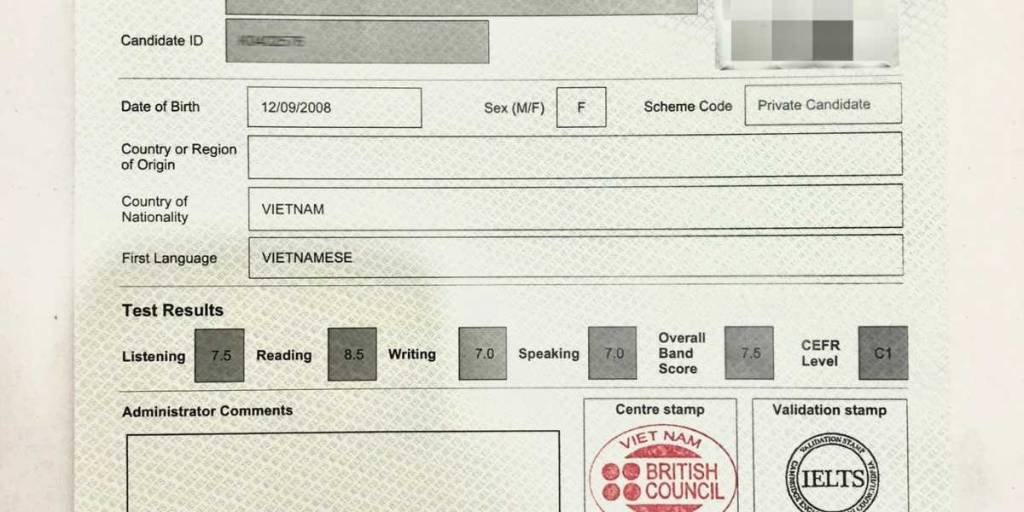
Cuối tháng 5/2022 tớ có đi thi IELTS ở Hà Nội và nhận về kết quả là 7.5. Và sau đây là một số chia sẻ của tớ trên hành trình đạt được 7.5 IELTS khi chỉ mới học lớp 8.
Nguyễn Tấn Phát – 7.0 IELTS
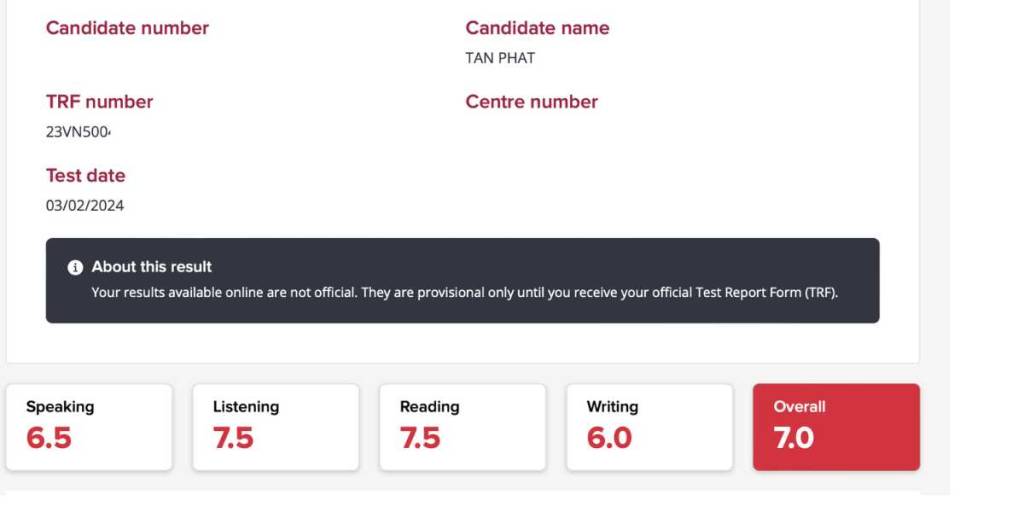
Phát là một bạn học viên rất bền bỉ. Xuất phát điểm của bạn là từ 2.0 IELTS, bạn đã trải qua liên tiếp hai khóa Level 2 từ 2.0 IELTS lên 3.5 IELTS và khóa Level 4 từ 5.0 IELTS lên 6.5 IELTS.
Lê Mỹ Nhớ – 7.0 IELTS
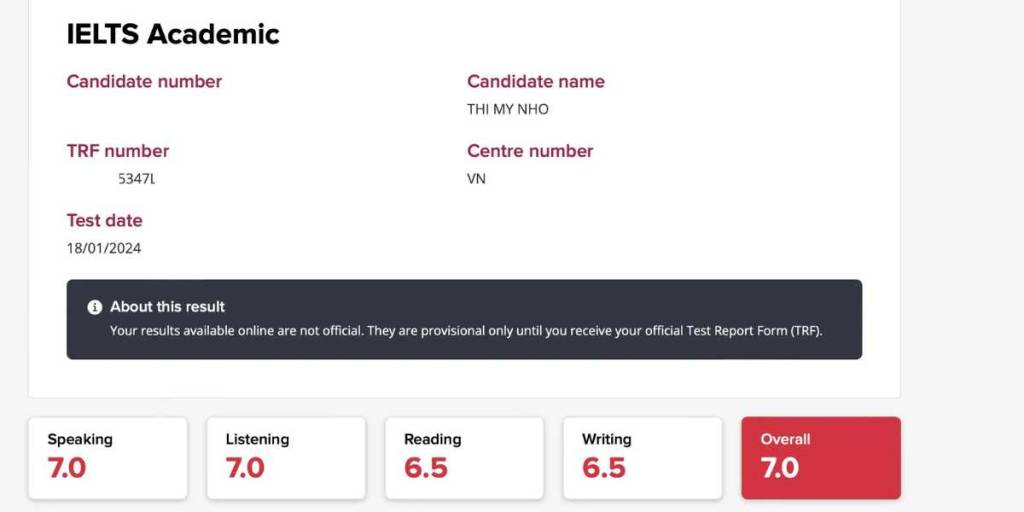
Học viên chăm chỉ của khóa Advanced IELTS, người chăm chỉ cày cuốc nhưng phong cách vẫn rất ung dung. Thành tích của bạn xứng đáng với công sức của bạn.
45 trường đại học xét tuyển với chứng chỉ IELTS năm 2024 mới nhất

Các trường hợp được xét tuyển thẳng vào Đại Học như đội tuyển THPT quốc gia hiện nay đã có thêm quy chế xét tuyển với các bạn có chứng chỉ 4.0, 5.5, 6.5 IELTS trở lên.
Những câu hỏi Extremely Hard Question trong Writing IELTS Part 7
Đây là phần 7 của dạng Extremely Hard Question. Cho dù bạn có định ôn tập Writing bất cứ chủ đề nào đi chăng nữa, vẫn sẽ có những kỳ thi có những câu hỏi nằm ngoài chủ đề đã ôn tập. Bây giờ bạn nên làm thế nào? Nếu như bạn học theo lộ trình cá nhân hóa tại TRI thì bạn chắc chắn sẽ giải quyết được vấn đề này. Còn nếu bạn chưa muốn học thì bạn cứ làm theo các dạng bài tập mà TRI biên soạn sau đây. Writing Task part 8 Can a single global government effectively address regional disparities and inequalities within and across countries? Do the advantages outweigh the disadvantages? Answer Agree Disagree 1. Uniform Standards: A global government could establish uniform standards for economic development, healthcare, education, and infrastructure, thereby reducing regional disparities. 1. Loss of Sovereignty: Countries may lose their sovereignty and cultural identity under a single global government, leading to resistance and conflict. 2. Resource Redistribution: A centralized authority could efficiently redistribute resources from wealthier regions to poorer ones, alleviating inequalities. 2. Corruption and Mismanagement: A single global government could become corrupt or inefficient, exacerbating disparities rather than addressing them. 3. Coordinated Efforts: Global coordination can enable effective responses to regional crises such as natural disasters, pandemics, or economic downturns. 3. Lack of Flexibility: Different regions have unique needs and challenges that may not be adequately addressed by a one-size-fits-all approach. 4. Conflict Resolution: A global government could mediate conflicts between regions, promoting peace and stability worldwide. 4. Tyranny and Oppression: Concentration of power in a global government could lead to tyranny and oppression, undermining human rights and freedoms. Summary: While a single global government could potentially address regional disparities through uniform standards, resource redistribution, coordinated efforts, and conflict resolution, the disadvantages of loss of sovereignty, corruption, lack of flexibility, and potential tyranny may outweigh these benefits. Balancing centralized authority with regional autonomy and diversity is essential to effectively tackle inequalities. Vocabulary Grammar Cấu trúc câu: Cấu trúc ngữ pháp: Bài viết gợi ý hoàn chỉnh cho chủ đề Extremely Hard Question Ensuring Transparency and Accountability in a One-World Government: Striking a Balance In envisioning a one-world government scenario, the imperative of transparency and accountability stands as a cornerstone principle. While this ambitious concept holds promises of global cooperation and unity, its realization hinges greatly on the establishment of robust mechanisms to uphold transparency and ensure accountability. On the side of agreement, proponents advocate for the implementation of strict transparency laws and regulations. They argue that requiring all government actions to be publicly disclosed would foster trust and legitimacy. Moreover, establishing independent oversight bodies to monitor governmental activities is seen as a critical safeguard against potential abuses of power. These bodies would play a pivotal role in ensuring compliance with transparency standards, thereby bolstering public confidence. Furthermore, technology emerges as a potent tool in this pursuit. Utilizing innovations such as blockchain could create immutable records of government transactions and decision-making processes, thereby enhancing transparency and reducing the risk of tampering or manipulation. Advocates also stress the importance of fostering a culture of civic engagement and participation. By empowering citizens to hold government officials accountable for their actions, this approach seeks to decentralize oversight and distribute responsibility among the populace. On the opposing side, skeptics voice concerns about the potential for government overreach and the loss of individual freedoms in a centralized system. They caution that while oversight bodies may be established with good intentions, there is a risk of corruption and manipulation within these institutions, undermining their effectiveness. Moreover, the complexity of technological systems poses a significant challenge. While blockchain technology holds promise, ensuring its accessibility and understanding for all citizens remains a daunting task. Additionally, concerns about geopolitical tensions and the potential for conflicts of interest within the one-world government raise questions about its ability to truly serve the interests of all humanity. In conclusion, while the advantages of transparency and accountability in a one-world government scenario are evident, striking a balance between these ideals and the practical realities of governance is paramount. By addressing concerns surrounding government overreach, technological complexity, and geopolitical tensions, we can pave the way for a more transparent and accountable global governance system, one that truly serves the needs and aspirations of all humanity. Đọc thêm bài trước cũng chủ đề Extremely Hard Questions: Những câu hỏi Extremely Hard Question trong Writing IELTS Part 6.
4 loại sách học IELTS cơ bản nhưng hiệu quả

4 loại sách học IELTS cơ bản nhưng hiệu quả nhất năm 2026. Góc nhìn ngược từ chuyên gia giúp bạn ngừng cày đề vô tội vạ và bứt phá band điểm.
Học IELTS từ 0 lên 6.5 mất bao nhiêu tiền? Bảng giá chi tiết và bẫy chi phí chìm 2026
Học IELTS từ 0 lên 6.5 mất bao nhiêu tiền năm 2026? Chi phí thực tế dao động từ 8.000.000đ (tự học) đến hơn 85.000.000đ (trung tâm trọn gói). Bài viết phân tích bóc tách các khoản phí ẩn, góc khuất “cam kết đầu ra”, so sánh giá các trung tâm và chiến lược tối ưu ngân sách từ The Real IELTS.
Học IELTS Tại Nhà: 10 Bước [Đơn Giản Mà Hiệu Quả] Để Bứt Phá Band 7.0+
![Học IELTS Tại Nhà: 10 Bước [Đơn Giản Mà Hiệu Quả] Để Bứt Phá Band 7.0+](https://therealielts.vn/wp-content/uploads/2024/03/hoc-ielts-tai-nha-10-buoc-don-gian-ma-hieu-qua.avif)
Tự học IELTS tại nhà bị chững band 5.5? Khám phá ngay 10 bước tự học IELTS tại nhà hiệu quả cao, đập tan lối mòn và bứt phá band 7.0+ từ chuyên gia.
Học IELTS Có Khó Không? 6 tips vượt khó

Khi bạn đang quen với hệ thống bằng cấp A B C, và bây giờ phải sử dụng hệ thống chứng chỉ IELTS thì kiểu gì bạn cũng tự hỏi: Học IELTS có khó không?
Học IELTS Cho Người Mất Gốc: 4 phao cứu sinh
Rất nhiều người quên mất tiếng Anh lầm vào tình trạng mất gốc, vậy nên nảy sinh ra nhu cầu học IELTS cho người mất gốc.